
How Customs Clearance Procedures Affect Delivery Schedules for International Orders
When you place an international order for custom drinkware—whether aluminum sports bottles, stainless steel tumblers, or promotional water bottles—one of the most critical factors in your delivery schedule is customs clearance. At Sensialu, a professional manufacturer of custom aluminum water bottles and stainless steel drinkware in Wuyi, Zhejiang, China, we understand that smooth logistics are just as important as product quality. In this article, we explain how customs clearance can impact your delivery timeline and what you can expect when working with a factory like ours.
What Is Customs Clearance?
Customs clearance is the process of getting your shipment legally approved for entry into the destination country. It involves submitting documentation, paying duties and taxes, and ensuring that the goods comply with local regulations. For international orders from China to markets like the United States, Europe, or Australia, every shipment must pass through customs before it reaches your warehouse or distribution center.
Key Causes of Customs Delays
Several factors can slow down customs clearance and extend your delivery schedule:
- Incomplete or inaccurate documentation: Commercial invoices, packing lists, and certifications must match exactly. Even a small discrepancy can trigger a hold.
- Missing or restricted product certifications: Drinkware may require food-grade material certificates, FDA or LFGB compliance documents, or other country-specific approvals.
- Random inspections: Customs authorities may randomly select shipments for physical inspection. This can add days to your lead time.
- Valuation issues: If customs believes the declared value is incorrect, they may require further proof or adjust the duties.
- High-volume seasons: During peak periods, customs offices process more shipments, which often leads to longer waiting times.
- Incorrect harmonized system (HS) codes: Using the wrong code can result in misclassification, penalties, and delays.
How Customs Clearance Affects Your Delivery Schedule: Typical Scenarios
Sea Freight
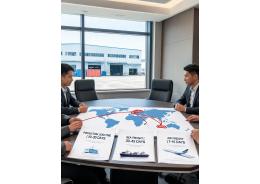
Sea freight has a longer transit time, but customs clearance can still add several days after arrival. For large factory orders of aluminum bottles or stainless steel tumblers shipped by sea, we recommend building in a buffer of 3–7 days for clearance at the destination port.
Air Freight
Air freight is faster, but customs holds can be more disruptive because the entire supply chain expects speed. If your air shipment is selected for inspection, expect delays of 1–3 days. With complete documentation, however, many air shipments clear within 24 hours.
Express Shipping
Courier services like DHL, FedEx, and UPS handle customs on your behalf, but they cannot guarantee immediate release. Their brokerage teams can help expedite the process, but local regulations still apply. For sample orders of custom water bottles, express shipping usually clears quickly—provided the correct documentation is prepared in advance.
How Sensialu Helps Minimize Customs Delays
As a manufacturer with years of export experience, Sensialu takes several proactive steps to keep your delivery schedule on track:
- Accurate export paperwork: We prepare commercial invoices, packing lists, and certificates of origin with the correct HS codes and precise product descriptions.
- Compliance with destination country regulations: Our team advises you on required certifications for drinkware in your market, such as FDA, LFGB, or EU standards.
- Clear quotation of incoterms: Whether you choose FOB, CIF, or DDP, we clearly define who is responsible for customs clearance and which party assumes the risk of delays.
- Communication and tracking: We keep you informed about when your order leaves our factory, when it is loaded on the vessel or flight, and what to expect upon arrival.
- Flexible shipping options: Depending on your urgency and budget, we recommend the best balance between transit time and cost—sea, air, or express.
Practical Tips for Buyers to Avoid Clearance Delays
- Provide your complete, accurate consignee details and tax identification number when the order is placed.
- Check with your local customs broker about import requirements for drinkware—these can change, so verify before shipment.
- Plan for seasonal peaks. If you need products before a major holiday, order early to account for customs backlogs.
- Communicate with us about your end delivery date. Sensialu can adjust production and shipping plans to meet your needs.
- Consider DDP shipping if you want us to manage the full logistics process including customs duties and taxes.
Conclusion
Customs clearance is an unavoidable part of international trade, but it does not have to disrupt your delivery schedule. By working with an experienced manufacturer like Sensialu, you gain a partner who prepares accurate documentation, offers reliable shipping options, and proactively communicates about any milestones that affect your order. Whether you are ordering custom aluminum sports bottles, stainless steel tumblers, or promotional drinkware, we are committed to getting your goods to your customers as smoothly as possible.
Have questions about shipping and customs for your next project? Contact us at [email protected] or call +86 15024587743. We are happy to help you plan a delivery schedule that works.
— Sensialu, custom water bottle manufacturer & drinkware supplier



 English
 German
 French
 Russian
 Spanish
 Japanese
 Korean
 Portuguese
 Ukrainian
 Arabic
 Italian


