
What Documentation Is Required for Smooth Customs Clearance When Importing Drinkware?
Importing custom aluminum water bottles or stainless steel drinkware can be a game-changer for your brand. However, one of the most common bottlenecks global buyers face is customs clearance delays due to missing or inaccurate documentation. At Sensialu (WUYI SENSI INDUSTRY & TRADING CO., LTD.), a professional manufacturer of custom aluminum and stainless steel drinkware, we understand that smooth logistics and on-time delivery start with the right paperwork. Here is a practical checklist of the essential documents you need to prepare for hassle-free customs clearance.
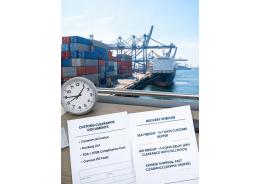
1. Commercial Invoice
This is the most critical document for any international shipment. It must clearly state the seller, buyer, description of goods, unit prices, total value, currency, and incoterms. Customs officials use it to assess duties and taxes. Ensure the product description matches the actual goods — for example, “custom insulated stainless steel tumbler” rather than a vague “bottle”.
2. Packing List
The packing list details what is inside each package: the number of cartons, weight, dimensions, and the quantity of each product. It helps customs officers verify the cargo without opening every box. It should align perfectly with the commercial invoice to avoid discrepancies.
3. Bill of Lading (B/L) or Air Waybill (AWB)
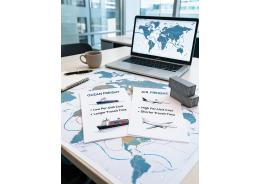
The B/L (for sea freight) or AWB (for air freight) is the shipping contract between the exporter and the carrier. It serves as proof of shipment and is required for customs clearance and to take possession of the cargo. Make sure the consignee and notify party details are correct.
4. Certificate of Origin
Many countries grant preferential tariff treatment under free trade agreements based on the certificate of origin. For drinkware manufactured in China, a standard Certificate of Origin (C/O) issued by the chamber of commerce or a Form A for certain destinations is often required. This document proves where the goods were produced.
5. Food Contact Material Compliance Documents
Since drinkware comes into direct contact with beverages, importing countries may require evidence that the materials (aluminum, stainless steel, plastic seals, coatings) comply with food safety regulations. For the U.S., this could be FDA compliance certificates; for the EU, EU Regulation (EC) 1935/2004 or LFGB certificates are common. Your manufacturer should be able to provide test reports confirming food-grade quality.
6. Test Reports and Certifications
Depending on your market, additional test reports may be requested: REACH, Proposition 65, California AB 1200 (for plastic materials), or BPA/BPS-free declarations. These documents prove the drinkware meets environmental and health standards, reducing the risk of rejection at the border.
7. Import License / Permit (If Applicable)
Some countries require an import license for certain categories of goods, especially if there are anti-dumping duties or special restrictions on steel products. Always verify with your local customs broker or the relevant trade authority.
8. Shipping Marks and Corresponding Documentation
Every carton must have shipping marks (such as product number, carton number, country of origin, and handling instructions) that match the packing list. Missing or mismatched marks can delay the inspection process.
Pro Tips for Avoiding Customs Delays
- Classify your product correctly under the Harmonized System (HS) code. For aluminum bottles, the HS code may differ from stainless steel tumblers or cups. Incorrect classification leads to duty overpayment or customs holds.
- Use a reliable customs broker or forwarder who understands the drinkware industry and destination market requirements.
- Keep all supplier documents consistent — the commercial invoice, packing list, and product labels must contain the same information.
- Plan ahead for certificates of analysis or laboratory test reports before the shipment departs to avoid last-minute requests.
At Sensialu, we produce high-quality custom aluminum water bottles, stainless steel bottles, tumblers and cups, and we work closely with global clients to ensure every order ships with complete and accurate commercial documentation. With our experience in OEM & ODM projects — from promotional bottles to branded retail lines — we know what it takes to keep your supply chain moving. If you are planning your next drinkware import, contact us to discuss your requirements and timeline.

 English
 German
 French
 Russian
 Spanish
 Japanese
 Korean
 Portuguese
 Ukrainian
 Arabic
 Italian


